Is That Crack Serious? A Guide to Foundation Cracks
David Beres October 2026
A crack in your home can make you fear the worst. Will the house need major repairs? Is your family safe? What should you do first?
Many cracks are small surface flaws. Others need a closer look. A crack that grows, has uneven edges, or appears with sticking doors deserves attention. Its width alone cannot tell the whole story. [1]
This guide will help you know what to watch for and what to ask. It cannot tell you the cause of a crack in your own home. That may take an in-person check.
Why Do Homes Get Cracks?
Your home rests on soil. When that soil moves, parts of the home may move too.
Some clay soils swell when wet and shrink when dry. This can change the support beneath a house. A leaking pipe can also soften soil or wash it away. [2]
Cracks can form in the building itself. Concrete shrinks as it dries. Heat and cold make it expand and contract. If it cannot move freely, a crack may form. Poor soil preparation or problems during concrete work can also lead to cracks. [3]
That is why a crack does not always mean the foundation is failing. The first task is to learn what caused it.
What Kind of Crack Are You Seeing?
Start with the material. Is the crack in paint, drywall, brick, a concrete floor, or a foundation wall? A paint line is not the same as a split through concrete.
Thin surface cracks
Small cracks may affect only the surface. Some concrete cracks form early as the material dries. Many do not weaken the concrete. Still, a photo cannot show how deep a crack goes. [3]
Vertical cracks
These cracks run up and down. Shrinkage can cause cracks in poured concrete walls. A vertical crack may be minor, but its direction does not prove it is harmless. Check for leaks, changes, and uneven edges. [4]
Diagonal cracks
These cracks run at an angle. You may see one near the corner of a door or window. Uneven movement is one possible cause. Shrinkage can also cause diagonal cracks near openings in concrete walls. The shape alone does not give you the answer. [4]
Stair-step cracks
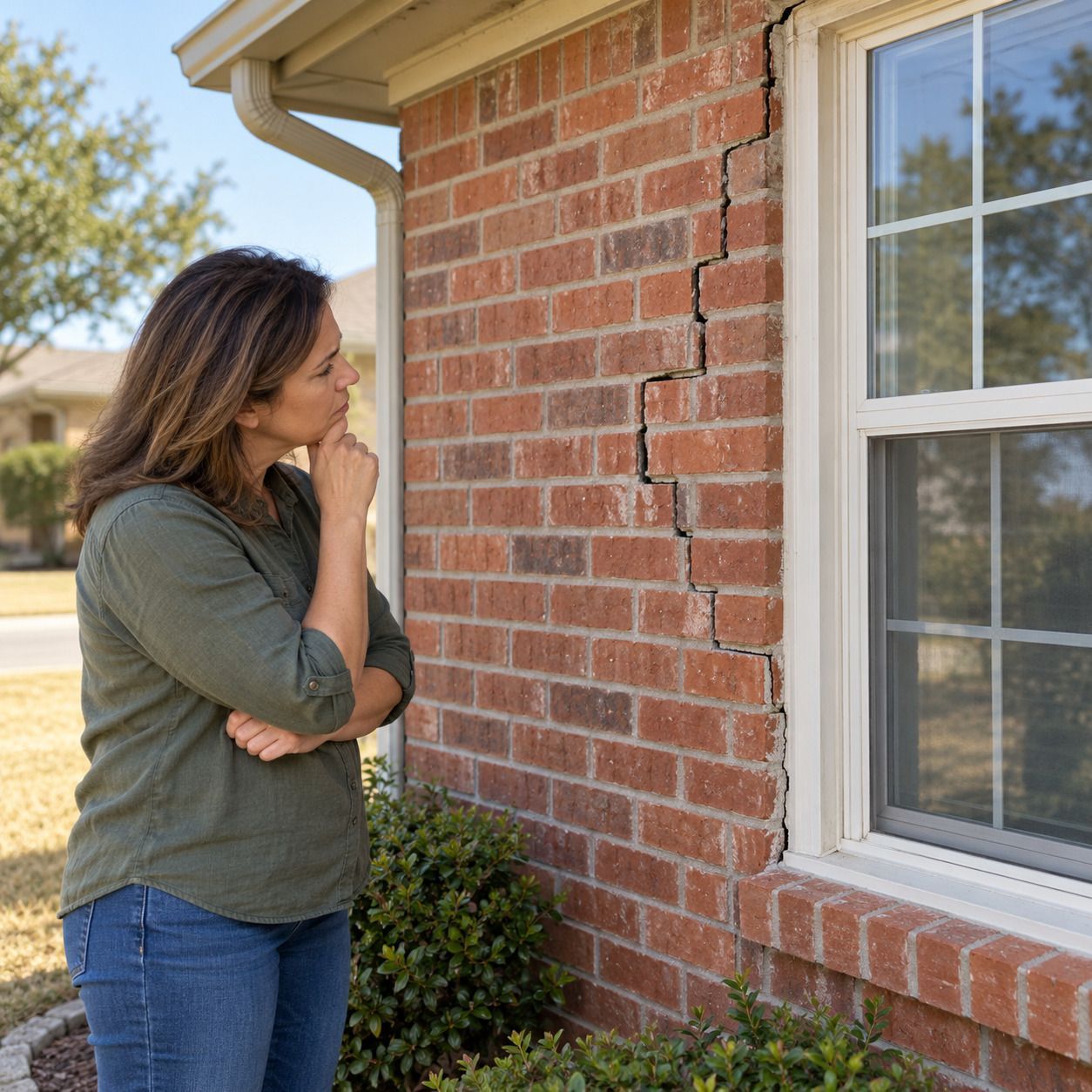
These cracks follow the joints between bricks or blocks. They look like a set of small steps. Record where they start and end. Ask a professional to check them, especially if they grow or appear with other changes.
Horizontal cracks
These run from side to side. A horizontal crack in a basement or foundation wall is more concerning if the wall also bows or leans. Arrange a prompt check by a structural engineer. [1]
Cracks across a concrete floor
A floor crack may come from shrinkage or a change in the support below it. Note whether both sides are level. Show the inspector any raised edge, gap, or change in the floor. [1, 3]
What Signs Make a Crack More Serious?
Look beyond one line in the wall. New or growing cracks, sticking doors, and new slopes in floors can be signs of ground movement.
Several changes together deserve a closer look. [2]
Make note of these clues:
• The crack gets longer or wider.
• More cracks appear nearby.
• Doors or windows start to stick without a clear reason.
• A floor develops a new dip or slope.
• One side of the crack sits higher than the other.
• A wall bows, leans, or pulls away.
• Water comes through the crack. [1, 2, 4]
A leak needs attention even when the wall is sound. Water problems can damage finishes and lead to damp conditions. The source of the water matters as much as the opening it uses. [5]
Do not rely on a rule such as “anything smaller than this is safe.” A thin crack that changes may need more attention than an old crack that stays the same.
For a broader checklist, read our post on other warning signs of foundation problems.
What Should You Do When You Find a Crack?
Take clear photos
Take one close-up and one photo of the whole wall or floor. Place a ruler next to the crack. Keep the camera angle about the same each time.
Make a simple record
Write down the date, room, and location. Note the widest point you can see. Mark the spot on your photo so you can compare the same place later.
Add notes about leaks, recent rain, or doors that have begun to stick. Keep old repair records with your photos.
Check for water problems
From a safe spot, look for water pooling near the house. Check whether roof runoff flows toward the foundation. Gutters, downspouts, and ground that slopes away from the home help manage rainwater. [5]
Avoid making large changes to soil or watering based on guesswork. Get advice that fits your home and soil. Proper drainage and steady soil moisture are important where soils expand and shrink. [6]
Decide when to call
Ask for an inspection if the crack grows, leaks, or comes with other changes. You do not need to wait for it to reach a certain width.
If a wall looks unstable or parts of the home appear to be shifting quickly, leave the affected area. Seek urgent help. Do not stay near it to take measurements.
For more background, read our homeowner’s guide to foundation problems.
Can You Fix a Foundation Crack Yourself?
Sometimes a small surface repair is enough. But first, find out whether the crack is only a surface flaw.
Painting over a crack makes it harder to track. Filling it does not tell you why it formed. Take photos before any patchwork.
A leaking crack may need a repair plan that also deals with water outside. An inside coating alone may leave the source of the problem in place. [5]
Ask these questions before you buy a repair product:
• Do I know what caused the crack?
• Has it stopped changing?
• Is the goal to improve its look, stop a leak, or restore support?
• Has someone qualified confirmed the right repair?
Do not try to lift a house or brace a failing wall yourself. Those jobs need a plan made for the building.
Who Should Check the Crack?
A licensed structural engineer can assess concerns about the parts that support your home. The engineer may take photos, measure movement, or check floor levels. [1]
Ask whether the engineer has experience with homes like yours. An independent review can also help you understand repair proposals.
A foundation repair company can explain the work it offers and provide a written estimate. Ask what evidence supports its plan. Also ask what the price includes and what the warranty covers.
Bring your photos and notes to the visit. Useful questions include:
• What do you think caused this crack?
• Does it need repair now or more tracking?
• Should a leak or drainage problem be fixed first?
• What would show that the problem is getting worse?
Common Questions About Foundation Cracks
Does every crack need major repair?
No. Some need only a surface repair. Others need work to address water or movement. Have the cause checked before choosing a fix.
Can a crack come back after patching?
Yes. A patch can open again if the cause remains. Ask what the proposed repair will solve and whether follow-up checks are needed.
How much will repair cost?
There is no single price for a crack. The cause, access, and type of work affect the cost. Request a written estimate based on your home. Our article on what affects foundation repair costs explains more.
Unsure About a Crack? Take the Next Step.
You do not have to diagnose the problem yourself. Start with clear photos, a few notes, and the right questions. Get help when you see changes or feel unsure.
Contact Wichita Falls Foundation Pros to ask about connecting with a foundation repair company serving Wichita Falls and the surrounding areas. We provide information and referrals. We do not inspect homes or perform repairs.
Sources
Numbers in the text refer to these sources. Accessed October 5, 2026.
1. National Association of Home Builders. “Misconceptions About the Common Crack — Summary.” View source
2. Royal Institution of Chartered Surveyors. “Subsidence.” Used for general causes and warning signs, not UK insurance advice. View source
3. National Ready Mixed Concrete Association. “CIP 4 — Cracking Concrete Surfaces.” View source
4. National Ready Mixed Concrete Association. “CIP 7 — Cracks in Residential Basement Walls.” View source
5. University of Minnesota Extension. “Moisture in basements: causes and solutions.” View source
6. Texas Department of Licensing and Regulation. “Foundations on Expansive Soils — Residential.” Used for drainage and soil moisture principles. View source